Nyemil, pisang Peppe


Pisang Peppe itu makanan yang populer, dia termasuk snack yang mengenyangkan. Cocok untuk perut kita. Selain harganya murah dan dapat dibagi-bagi, pisang sangat populer tidak mengenal musim. Itulah menjadi alasan begitu banyak olahan dari bahan pisang, salah satunya ya pisang Peppe

Peppe yang berarti di tekan sehingga menjadi gepeng seperti papan. Untuk mendapatkan pisang pepe yang mantap, memilih pisang tidak boleh sembarang, harus muda dan tidak terlalu muda dan tidak boleh tua yang mendekati masak. yang muda mendekati SEDIKIT TUA. Hahahaha. Sulit ya membahasakan saya juga tidak tahu dan tidak pernah menghitung berapa hari dipohon sehingga menghasilkan buah pisang yang pas untuk di Peppe.

Dari hasil review yang saya baca di cookpad, inilah resep pisang Peppe terbaik untuk saya, silahkan dicoba

https://cookpad.com/id/resep/8312747-sanggara-peppe-khas-makassar?via=search&search_term=sanggara%20peppe

  1. 1 sisir pisang kepok yg masih mentah/mengkal
  2. Bumbu rendaman:
  3. 2 siung bawang putih
  4. Secukupnya garam
  5. Secukupnya air
  6. Bahan sambal
  7. Secukupnya cabe rawit / sesuai selera saja
  8. 2 siung bawang putih
  9. 2 butir bawang merah
  10. Secukupnya garam
  11. Secukupnya gula
  12. Secukupnya terasi
  13. Minyak untuk menggoreng
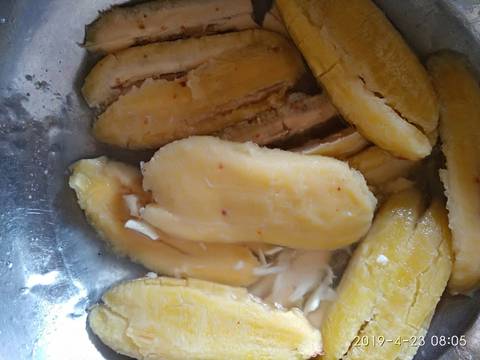
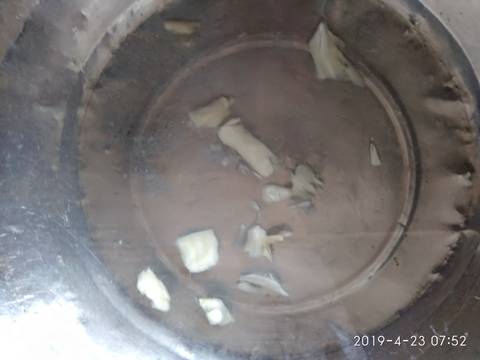
    1. Siapkan bahan,siapkan bahan rendaman,bawang putih di geprek campur dengan air dan garam,kupas pisang


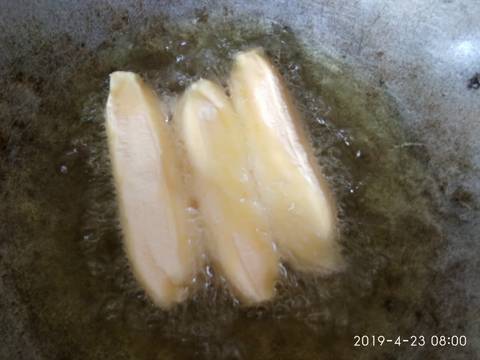
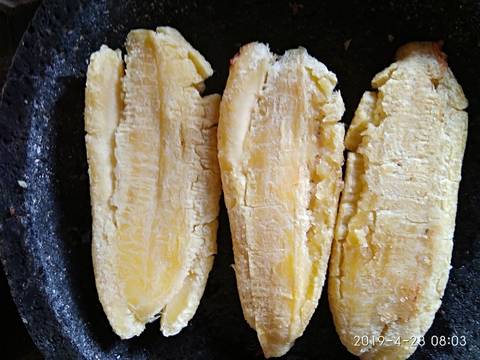
    2. Panaskan minyak,goreng pisang hingga setengah matang angkat dan pukul pukul / geprek,rendam selama 5 menit dalam larutan bawang putih dan garam,s


    3. Goreng kembali hingga matang,angkat dan tiriskan,goreng bahan sambal,haluskan tambahkan garam koreksi rasa sajikan pisang dengan sambal

Comments

Popular posts from this blog

SEO- Chapter 1 :

Perfect ✅ Thanks for clarifying. Here’s a complete, study-friendly breakdown of Chapter 1 from The Art of SEO: Mastering Search Engine Optimization, 4th Edition by Eric Enge, Stephan Spencer, and Jessica Stricchiola — structured sub-chapter by sub-chapter. Chapter 1: Search—Reflecting Consciousness and Connecting Commerce 1.1 Search: The Invisible Hand Guiding Our Lives Search engines have become central to daily life — people rely on them for answers, guidance, and decisions. Queries represent real human desires and needs ; they are a reflection of collective consciousness. Without search engines, the vastness of the internet would be chaotic and unusable. SEO exists because people depend on search to filter and access relevant knowledge. Key Point: Search is more than technology — it mirrors human thought and curiosity. 1.2 Search as Human Behavior Search is a natural extension of human problem-solving. Queries can be categorized into types of intent : Informational : Seeking know...

SEO chapter 2 :

Got it 👍 Let’s create a structured Chapter 2 summary of The Art of SEO: Mastering Search Engine Optimization, 4th Edition by Eric Enge, Stephan Spencer, and Jessica Stricchiola. Chapter 2 Summary – A Brief History of Search Engines 2.1 Early Days of the Web Pre-Google Search : Before modern search engines, directories like Yahoo! Directory and DMOZ (Open Directory Project) were the main way to find content. Pages were listed manually and organized by categories. Limitations : Manual curation couldn’t keep up with web growth. Listings were subjective, incomplete, and often outdated. Users increasingly demanded automated indexing . 2.2 The First Search Engines Archie (1990) : First tool to index FTP archives. Very primitive—focused on file names, not content. Excite, Lycos, AltaVista, Infoseek : Introduced in the mid-1990s. Began indexing web page content automatically. Still limited in ranking relevance. Key Shift : Move from curated directories to ...

Ethnography as Method and Methodology

Introduction As argued in Chapter 1, methods are presented in research textbooks as pro- cedural rules for obtaining reliable and objective knowledge. One kind of method concerns procedural rules for collecting data, of which ethnography is an example. Ethnography tends to rely on a number of particular data col- lection techniques, such as naturalistic observation, documentary analysis and in-depth interviews. While these methods are used on their own as well, what marks their ethnographic application is that they are used to study a people in a naturally occurring setting or 'field', in which the researcher par- ticipates directly, and in which there is an intent to explore the meanings of this setting and its behaviour and activities from the inside. This is what 'ethnography-understood-as-fieldwork' means. However, the procedural rules that lay down how this is properly done, and which thereby certify the knowledge as reliable and objective, obtain their legitim...